Lately I've been spending a lot of time reading up on the various strains of German Shepherd Dog here in the U.S. Show lines, working lines, import lines, distinctions between various import lines, and so on and so forth down a rabbit hole to infinity. I've even picked out one or two kennels I like, although adding another Permanent Dog is verboten for at least a few more years.
My next competition dog -- the one I frequently refer to as Imaginary Future Schutzhund Dog, even though I've never once in my life been to a Schutzhund competition or even attended a training session in person and have no idea whether I'd actually enjoy the sport -- will very probably be a German Shepherd from European working lines, most likely Czech or East German. They're a little smaller than some of the other types, they don't have the extreme rear end angulation of the show GSDs (which, to my mutt-accustomed eye, looks deformed), and, most importantly, they are bred to have stable temperaments coupled with high intelligence and a powerful desire to work.
That's my perfect dog right there. A smart, steady dog who thrives on learning and working and, eventually, competing.
I don't have that dog right now. It pains me and makes me feel incredibly guilty to admit it, because I love my dogs so much and I know they try their hardest for me, but there's that pernicious, persistent grass-is-greener fantasy lurking in the back of my mind: What if Pongu weren't pathologically fearful? What if his physical structure were sound? What if I could have a dog with his intelligence and devotion and joy in work, but without the extreme neophobia and anxiety and that crippling old injury in his foot?
I've built up Imaginary Future Schutzhund Dog in my mind as a perfect version of Pongu with all his flaws magically erased (also, 20 pounds bigger and totally unfazed by jerks on the street who bother us after dark and/or intentionally try to scare him, because what the hell, this is my imaginary perfect fantasy dog and unlike poor frightened Pongu, he will EAT YOU if you try that. Yes, this addendum is motivated by a group of teenagers who intentionally stomped and charged at my dog to frighten him. Yes, I'm still angry).
Minor rant aside, I know why I've been spending so much time thinking about this lately: because we're about to undertake a new challenge and I am afraid we won't do well.
In a couple of weeks I'll be starting a competition obedience class with Pongu. I don't know what to expect. I have a great fear that he won't be able to do competition obedience, because he is shy and fearful and easily stressed. It's lightyears better than it was, but the exercises in competition obedience are targeted straight at the things that are hardest for him: being approached and touched by strangers, working at a distance from his handler, holding long-duration Stays out of sight.
Even if he can do it, will he enjoy it?
Pongu loves Rally because he's good at it, and the reason he's good at it is because Rally asks for the things he likes doing: staying close to his person, paying rapt attention to everything his person does, occasionally taking easy jumps, and never really having to go near the judge except when his leash goes on or off at the start and finish lines. He can do these things very well and that builds his confidence, which is the whole reason we got started doing it in the first place.
But we're almost done with learning Rally. Pongu has gotten all the Level 3 exercises down to a satisfactory level in familiar environments. There's still a lot of polishing and perfecting to be done, and I expect he'll continue to fall apart and NQ in the competition ring a few times, but the learning is done. He knows the exercises. All that's left is proofing and practice -- and, of course, competing intensely for the next 18 to 20 months until he earns his ARCHMX and gets nationally ranked and beats the game.
Now is the time to start learning something else. I love agility, but we can't really do it because of Pongu's aforementioned crippling physical issues and also the simple lack of space that comes with condo living in the middle of a city (really, if I were sufficiently hardcore about it, we could do agility in small doses on pop-up equipment, and we might yet take a shot at it... but given those limitations, we'd never be serious competitors, so I can't get all that interested in it). Nosework's an option, but I'm inclined to leave that one on the back burner for when Pongu's older and even less athletic than he is now. That leaves obedience, where the obstacles are primarily psychological rather than physical, as the one big obvious candidate.
But I am afraid that perhaps I'm expecting too much, or pushing too far, by trying to get my little fearful rehab mutt into the oh-so-intimidating obedience ring. It's the oldest of the dog sports, its top honor is still considered the Mt. Everest of competition titles by some, and its culture can be pretty nasty in some quarters between the snobbery of some purebred aficionados and the lingering hold that punishment-based training has in places. Dogs are specially bred for this sport, and even with obedience in their blood and the aid of hardcore handlers, they fail by the dozens. And people are pleased about it! As far as I can tell, competition obedience is meant to be unwelcoming.
I honestly don't know if we're up to it, but if we enter, I damn well intend to win. And I don't know if Pongu can win, given his assorted problem areas. I don't know if he can even compete. I worry that pushing him too hard here will cause him to backslide in other areas and perhaps even ruin his enjoyment of Rally, where he's doing so well.
So I spend a lot of time fantasizing about a dog who has no fear. I daydream about the ultraperfect Imaginary Future Schutzhund Dog, who has none of my 'fraidy little pound dog's issues. Because I'm afraid.
It's not a good place to be, but that's where we are right now.
Wednesday, April 24, 2013

Tuesday, April 16, 2013
Dog Mob: Assistant Bartenders
Subtitled: a marginally (very marginally) more useful exercise than Utility scent articles.
At the beginning of the month, I decided that my next seasonal trick was going to be teaching Dog Mob to make Cinco de Mayo margaritas. I announced this on April 1 so, understandably, a lot of my friends thought I was joking and it was an April Fool's gag.
But nope, I meant it. Of course Dog Mob can't literally make margaritas because they have no hands, and while it is possible to get a dog to open a screw-top bottle, any liquor bottle big enough for Pongu to get a decent grip on the top would also be too big for him to lift and pour. So actual margarita making was off the table.
What we did instead was a series of scent discrimination and object targeting exercises. Here's the finished version:
And here's how we got there...
Step 1: Scent Recognition
The first step was for Dog Mob to be able to distinguish one liquor bottle from another. They can't read labels, and the bottles' appearances are sufficiently similar that they had a hard time with purely visual recognition (however, the plastic lime looks different enough from the other mixers that Pongu could identify that one by sight, so that portion of the trick is based on visual recognition).
In my experience, the easiest way to teach scent recognition to a dog who has no prior familiarity with that exercise is to rub a bit of smelly food on the article to be identified. Food smells are inherently interesting, so it's easy for a dog to pick out the object that smells like cheese or hot dog juice or whatever else you're using. Once the concept is clearly understood, you can use different scents and have the dog identify those.
I got it in my head that it would be pretty funny if I could teach Dog Mob to identify different liquors by scent, so for this trick, I dabbed a little bit of the relevant liquors onto a cottonball and then dabbed the cottonball onto the paper labels, figuring that would hold the scent better than the glass bottle. Really, dogs' noses are good enough that I'm sure they'd be able to find it on the bottle too, but I did it this way anyhow.
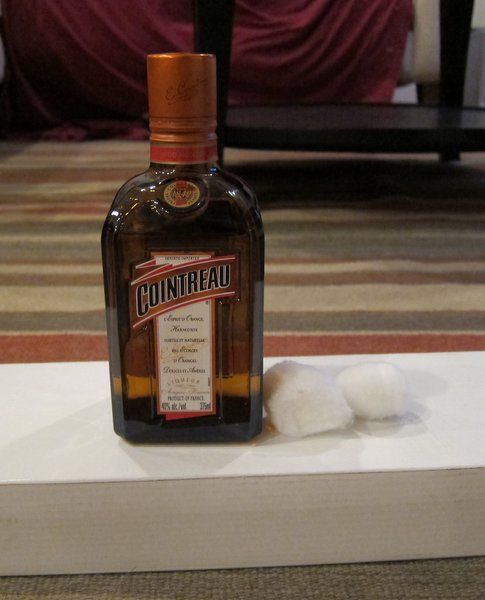
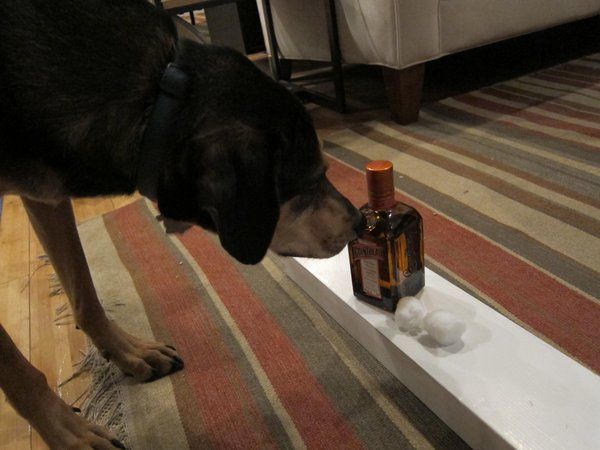
After waiting a couple of minutes for the alcohol to evaporate (otherwise it acted as a mild aversive, as I discovered when I asked Pongu to pick up the tequila bottle too soon after dabbing it), I invited Dog Mob to sniff the bottles. Any contact to the scented object got a click and treat.
Step 2: Paw Touch/Directed Retrieve - Single Object
Next, I put the scented article on a platform by itself and asked the dog to either retrieve the object (for the lime and tequila bottle) or mark it with a paw touch if it was too big to retrieve (Cointreau bottle, sugar box, salt container). Both dogs already knew these actions, so I didn't have to shape the movements from scratch; it was just a matter of getting them to target the intended objects. So we practiced it a few times, and each correct gesture earned a click and a treat. Once the dog was doing the correct motion with no hesitation, we moved on.
Step 3: Selecting Correct Object
The third step was for the dog to be able to select the correct object from a lineup of dummy objects. For Crookytail, who was new to this sort of thing, I started with just one dummy and one correct object, then slowly worked up to two dummies and one correct object. Pongu is more experienced with object discrimination exercises, so I started him on multiple dummies right away.
At this stage, picking the wrong object gets a NRM and an invitation to re-try, while every correct answer is given a click and treat.
For the salt/sugar "what goes on the rim?" question, I wanted each dog to select a different answer, so I put the other dog's answer in the lineup too and treated it as a dummy (i.e., Crookytail was asked to choose between the sugar box and the salt container, and rewarded only for choosing the sugar box; vice versa for Pongu).
Step 4: Putting It All Together
From there, all that was left was putting the whole thing together.
The final version of the margarita trick is done exclusively with off-camera hand gestures. Other than each dog being released from Stay by name in the last segment, there are no verbal cues, because my attempts to work verbals into the dialogue resulted in both dogs anticipating the cues and doing the exercises as soon as I started talking, instead of waiting until they appeared to be responding to my questions. So instead of giving them verbal cues, I used a very simple system of "stop/move" hand gestures for both dogs. The only cue I'm giving tells them when to move and when to stop; everything else is determined by the context and props.
I also realized that for the last segment, I had to release Crookytail first, because he is so used to holding a Stay while Pongu works that he wouldn't budge once Pongu moved. Unless I specifically asked him to do something, and asked him first, Crooky thought that, as usual, his job was just to keep out of the way. So, again, we adjusted the sequencing a little to achieve the desired effect. (I probably could have gotten it to go the other way eventually, but for a jokey thing like this, why?)
And that's how we did the margarita trick.
At the beginning of the month, I decided that my next seasonal trick was going to be teaching Dog Mob to make Cinco de Mayo margaritas. I announced this on April 1 so, understandably, a lot of my friends thought I was joking and it was an April Fool's gag.
But nope, I meant it. Of course Dog Mob can't literally make margaritas because they have no hands, and while it is possible to get a dog to open a screw-top bottle, any liquor bottle big enough for Pongu to get a decent grip on the top would also be too big for him to lift and pour. So actual margarita making was off the table.
What we did instead was a series of scent discrimination and object targeting exercises. Here's the finished version:
And here's how we got there...
Step 1: Scent Recognition
The first step was for Dog Mob to be able to distinguish one liquor bottle from another. They can't read labels, and the bottles' appearances are sufficiently similar that they had a hard time with purely visual recognition (however, the plastic lime looks different enough from the other mixers that Pongu could identify that one by sight, so that portion of the trick is based on visual recognition).
In my experience, the easiest way to teach scent recognition to a dog who has no prior familiarity with that exercise is to rub a bit of smelly food on the article to be identified. Food smells are inherently interesting, so it's easy for a dog to pick out the object that smells like cheese or hot dog juice or whatever else you're using. Once the concept is clearly understood, you can use different scents and have the dog identify those.
I got it in my head that it would be pretty funny if I could teach Dog Mob to identify different liquors by scent, so for this trick, I dabbed a little bit of the relevant liquors onto a cottonball and then dabbed the cottonball onto the paper labels, figuring that would hold the scent better than the glass bottle. Really, dogs' noses are good enough that I'm sure they'd be able to find it on the bottle too, but I did it this way anyhow.
After waiting a couple of minutes for the alcohol to evaporate (otherwise it acted as a mild aversive, as I discovered when I asked Pongu to pick up the tequila bottle too soon after dabbing it), I invited Dog Mob to sniff the bottles. Any contact to the scented object got a click and treat.
Step 2: Paw Touch/Directed Retrieve - Single Object
Next, I put the scented article on a platform by itself and asked the dog to either retrieve the object (for the lime and tequila bottle) or mark it with a paw touch if it was too big to retrieve (Cointreau bottle, sugar box, salt container). Both dogs already knew these actions, so I didn't have to shape the movements from scratch; it was just a matter of getting them to target the intended objects. So we practiced it a few times, and each correct gesture earned a click and a treat. Once the dog was doing the correct motion with no hesitation, we moved on.
Step 3: Selecting Correct Object
The third step was for the dog to be able to select the correct object from a lineup of dummy objects. For Crookytail, who was new to this sort of thing, I started with just one dummy and one correct object, then slowly worked up to two dummies and one correct object. Pongu is more experienced with object discrimination exercises, so I started him on multiple dummies right away.
At this stage, picking the wrong object gets a NRM and an invitation to re-try, while every correct answer is given a click and treat.
For the salt/sugar "what goes on the rim?" question, I wanted each dog to select a different answer, so I put the other dog's answer in the lineup too and treated it as a dummy (i.e., Crookytail was asked to choose between the sugar box and the salt container, and rewarded only for choosing the sugar box; vice versa for Pongu).
Step 4: Putting It All Together
From there, all that was left was putting the whole thing together.
The final version of the margarita trick is done exclusively with off-camera hand gestures. Other than each dog being released from Stay by name in the last segment, there are no verbal cues, because my attempts to work verbals into the dialogue resulted in both dogs anticipating the cues and doing the exercises as soon as I started talking, instead of waiting until they appeared to be responding to my questions. So instead of giving them verbal cues, I used a very simple system of "stop/move" hand gestures for both dogs. The only cue I'm giving tells them when to move and when to stop; everything else is determined by the context and props.
I also realized that for the last segment, I had to release Crookytail first, because he is so used to holding a Stay while Pongu works that he wouldn't budge once Pongu moved. Unless I specifically asked him to do something, and asked him first, Crooky thought that, as usual, his job was just to keep out of the way. So, again, we adjusted the sequencing a little to achieve the desired effect. (I probably could have gotten it to go the other way eventually, but for a jokey thing like this, why?)
And that's how we did the margarita trick.
Saturday, April 13, 2013
Pongu Turns Three
Happy birthday, Pongu!
Today (well, within maybe a week of today) he is THREE YEARS OLD.
By coincidence, there was a doggy ice cream truck outside Morris Animal Refuge -- the shelter where Pongu's from -- this afternoon, so we stopped by to grab some ice cream and then took a few pictures in front of the Morris mural.
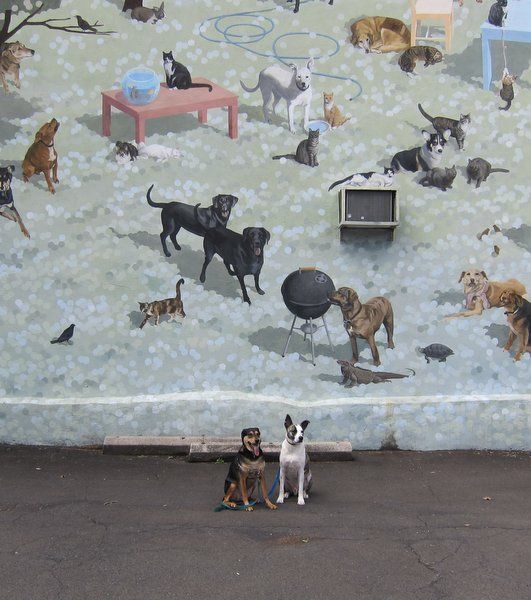
It gave me occasion to reflect on just how far we've come together since the summer of 2010, when I saw a terrified puppy huddled in the back of his shelter cage and, without knowing anything beyond "poor little guy," took him home.
It's been a long road of behavioral rehab since then, and our lives have changed a lot. And while I often say I wouldn't do it again if I had known then what I know now, I can't deny that it's tremendously rewarding to look back and reflect on how far we've come together.
In the summer of 2010, we started here:
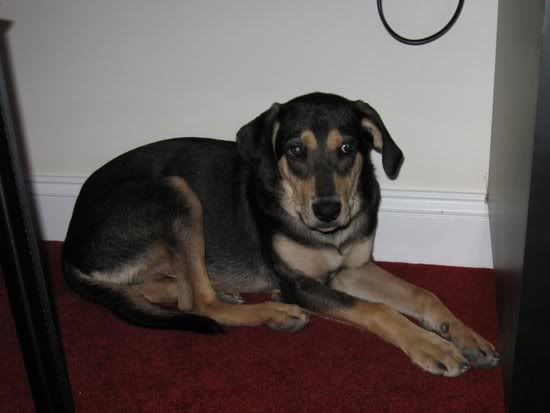
...and some two and a half years later, we're here:
Learning and working with Pongu has been an amazing journey. He's my first dog, my heart dog, the dog I love more than anything in the world. And we've got many more adventures ahead.
Today (well, within maybe a week of today) he is THREE YEARS OLD.
By coincidence, there was a doggy ice cream truck outside Morris Animal Refuge -- the shelter where Pongu's from -- this afternoon, so we stopped by to grab some ice cream and then took a few pictures in front of the Morris mural.
It gave me occasion to reflect on just how far we've come together since the summer of 2010, when I saw a terrified puppy huddled in the back of his shelter cage and, without knowing anything beyond "poor little guy," took him home.
It's been a long road of behavioral rehab since then, and our lives have changed a lot. And while I often say I wouldn't do it again if I had known then what I know now, I can't deny that it's tremendously rewarding to look back and reflect on how far we've come together.
In the summer of 2010, we started here:
...and some two and a half years later, we're here:
Learning and working with Pongu has been an amazing journey. He's my first dog, my heart dog, the dog I love more than anything in the world. And we've got many more adventures ahead.
Sunday, April 7, 2013
ARCH TDCH Pongu the Insane, RL1X
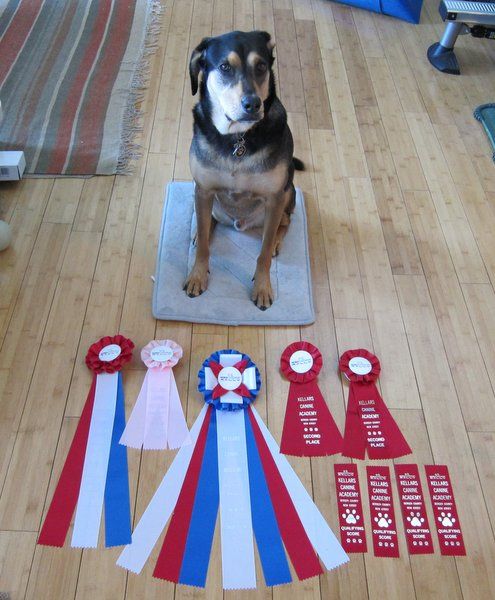
Well, we cut it awfully close, but Pongu earned his ARCH before his third birthday. Exactly one week before, in fact; he turns three next Saturday.
And he picked up his RL1X for good measure, so he'll be a triple champion when he is three. Symmetry!
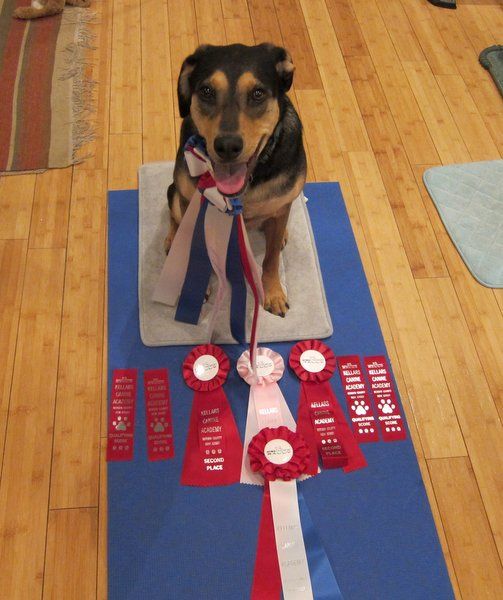
This weekend's trial was held at Kellar's Canine Academy, located in Saddle Brook, New Jersey, about 15-20 minutes outside of NYC. This might have been the first time they'd hosted a World Cynosport Rally trial, but you wouldn't have known it if the staff hadn't made a point of mentioning it. Everything ran super smoothly and efficiently; they finished two trials with five classes apiece (the standard Levels 1, 2, and 3, plus Puppy and Junior; there wasn't a Veteran class at this particular event) in just over six hours, which is absolutely lightning speed.
It was a very well-run trial, and I would recommend the hosting club to anyone who happens to be in the area. Plus, the ribbons were extra pretty, and for me at least, that's not a small consideration. It doesn't matter so much for the Q legs or even the individual level championships like the RL1X, but for the "big" titles -- ARCH, ARCHX, ARCHEX and ARCHMX -- I'm not above admitting that I try to earn that last set of Qs at a club that's got extra nice ribbons. Those four titles are big events in a dog's career, and I want to have ribbons gorgeous enough to commemorate them. Tied with the Dog Training Center of Chester County's, so far Kellar's ribbons are my favorites... and yeah, I'll make a two-hour drive to trial for those, at least if my dog's up for something big!
The entries ran the gamut from Level 1A newbies to one dog who was closing in on her ARCHMX (the highest title in APDT/World Cynosport Rally), and who very probably earned it that day. Pongu was completely exhausted by that point, so we had to leave and I missed seeing the dog's final run, but she was showing so beautifully that day that I'd be willing to make a pretty big bet she nailed the last Q too.
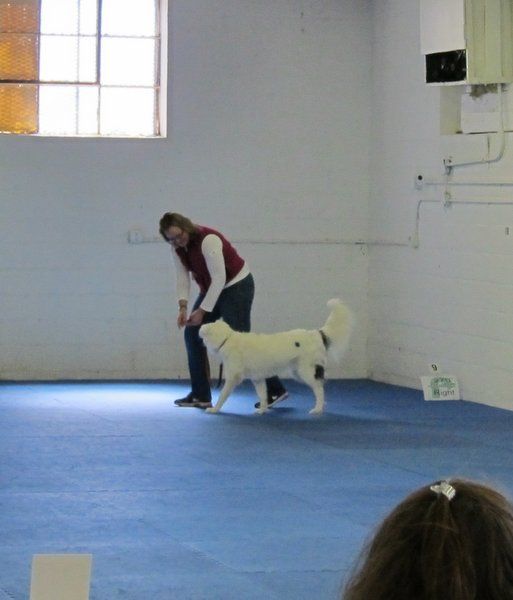
There was a beautiful deaf white border collie pup who, despite his handicap, was able to communicate clearly with his handler via sign language and whose joy at working was really inspiring to see. Deaf dogs don't always have their gifts appreciated, but it was obvious from watching them for even a minute that this dog was enthusiastic as hell and just thrilled to be in the ring with his person. I didn't get the best picture of them working together, but I wanted to try, since seeing that bond was so inspiring.
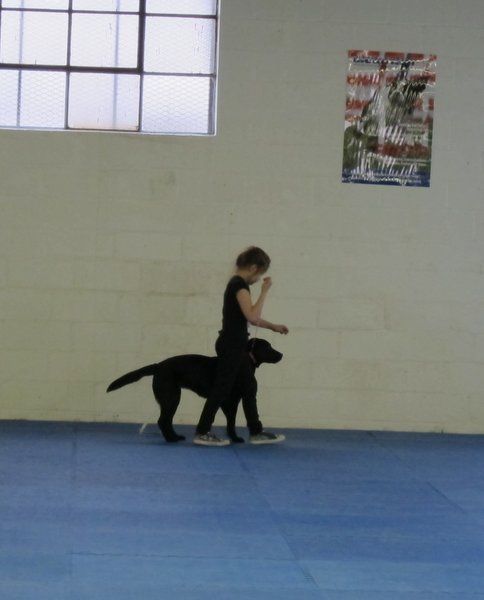
There was also a junior handler who I would guess was maybe around 10? (I'm not sure, I'm so bad at guessing kids' ages!) and who was running her mom's CDX Labrador Retriever in the ring. They made a very cute team, and I was particularly impressed by how smoothly her mom combined praise for the kid's efforts with gentle guidance so she could do even better in the future.
As for Pongu the Insane, he made me proud. It was a new venue, and the field of dogs was stellar, but he distinguished himself and placed in the ribbons three out of four times, missing only the run that was by far the most stressful. It was the last Q we needed and the last chance we had to get it before my arbitrary self-imposed deadline (which suddenly became a lot less arbitrary once I saw how nice those ARCH ribbons were...), and it was a Level 2 course riddled with landmines aimed directly at our weaknesses: Send Over Jump, Moving Down and Forward, and Moving Down Leave Dog. Oof.
Other people may dread the legendary Figure 8 around food bowls, but I'll take twenty food bowls any day over that cursed Moving Down Leave Dog bonus exercise. Moving Downs are our kryptonite... one of several varieties, anyhow.
Alas, the choice wasn't mine, so we struggled to get that final Q on the course we were given. And Pongu actually did a really good job, despite his person making bizarre crazy panic noises constantly and flailing around like an idiot. He balked on the jump, but (THANK GOD) did not pass the uprights, so we took the 3-point hit for a retry and got it the second time. He did fine on the first moving Down, but balked on the second, so that was another 3-point hit on repeated cues. A pop-up on a Sit-Stay (he didn't break the Stay, but did stand up as soon as I turned to look at him) cost us a final 3-point penalty, resulting in a total score of 201.
It was the lowest score he earned all day, but it was more than good enough to get our last QQ, and I am so not complaining. His performances are continuing to improve steadily, and I am thrilled with how he's coming along.
As an epilogue, we NQ'ed our first attempt at a Level 3 run on just the third sign. Sigh. It was a Recall Over Jump, and at that point in the afternoon Pongu was tired and stressy and not into it anymore, so we took the NQ and went home. He had been sick earlier this week with a stomach bug, and although our vet cleared him to attend the competition, I don't think he was feeling quite up to 100% after a day of hard work.
I didn't mind. We're not really ready for Level 3 yet anyhow (I mostly just signed up for the run to see how we'd do, and it confirmed that yep, we're definitely not ready yet!), and Pongu did great otherwise. We can always try again next time, or the one after.
Because he nailed his ARCH and his RL1X, and got not one but two huge gorgeous championship ribbons to hang on the trophy wall, and so for a little while I can afford to be patient again.
And he picked up his RL1X for good measure, so he'll be a triple champion when he is three. Symmetry!
It was a very well-run trial, and I would recommend the hosting club to anyone who happens to be in the area. Plus, the ribbons were extra pretty, and for me at least, that's not a small consideration. It doesn't matter so much for the Q legs or even the individual level championships like the RL1X, but for the "big" titles -- ARCH, ARCHX, ARCHEX and ARCHMX -- I'm not above admitting that I try to earn that last set of Qs at a club that's got extra nice ribbons. Those four titles are big events in a dog's career, and I want to have ribbons gorgeous enough to commemorate them. Tied with the Dog Training Center of Chester County's, so far Kellar's ribbons are my favorites... and yeah, I'll make a two-hour drive to trial for those, at least if my dog's up for something big!
The entries ran the gamut from Level 1A newbies to one dog who was closing in on her ARCHMX (the highest title in APDT/World Cynosport Rally), and who very probably earned it that day. Pongu was completely exhausted by that point, so we had to leave and I missed seeing the dog's final run, but she was showing so beautifully that day that I'd be willing to make a pretty big bet she nailed the last Q too.
There was a beautiful deaf white border collie pup who, despite his handicap, was able to communicate clearly with his handler via sign language and whose joy at working was really inspiring to see. Deaf dogs don't always have their gifts appreciated, but it was obvious from watching them for even a minute that this dog was enthusiastic as hell and just thrilled to be in the ring with his person. I didn't get the best picture of them working together, but I wanted to try, since seeing that bond was so inspiring.
There was also a junior handler who I would guess was maybe around 10? (I'm not sure, I'm so bad at guessing kids' ages!) and who was running her mom's CDX Labrador Retriever in the ring. They made a very cute team, and I was particularly impressed by how smoothly her mom combined praise for the kid's efforts with gentle guidance so she could do even better in the future.
As for Pongu the Insane, he made me proud. It was a new venue, and the field of dogs was stellar, but he distinguished himself and placed in the ribbons three out of four times, missing only the run that was by far the most stressful. It was the last Q we needed and the last chance we had to get it before my arbitrary self-imposed deadline (which suddenly became a lot less arbitrary once I saw how nice those ARCH ribbons were...), and it was a Level 2 course riddled with landmines aimed directly at our weaknesses: Send Over Jump, Moving Down and Forward, and Moving Down Leave Dog. Oof.
Other people may dread the legendary Figure 8 around food bowls, but I'll take twenty food bowls any day over that cursed Moving Down Leave Dog bonus exercise. Moving Downs are our kryptonite... one of several varieties, anyhow.
Alas, the choice wasn't mine, so we struggled to get that final Q on the course we were given. And Pongu actually did a really good job, despite his person making bizarre crazy panic noises constantly and flailing around like an idiot. He balked on the jump, but (THANK GOD) did not pass the uprights, so we took the 3-point hit for a retry and got it the second time. He did fine on the first moving Down, but balked on the second, so that was another 3-point hit on repeated cues. A pop-up on a Sit-Stay (he didn't break the Stay, but did stand up as soon as I turned to look at him) cost us a final 3-point penalty, resulting in a total score of 201.
It was the lowest score he earned all day, but it was more than good enough to get our last QQ, and I am so not complaining. His performances are continuing to improve steadily, and I am thrilled with how he's coming along.
As an epilogue, we NQ'ed our first attempt at a Level 3 run on just the third sign. Sigh. It was a Recall Over Jump, and at that point in the afternoon Pongu was tired and stressy and not into it anymore, so we took the NQ and went home. He had been sick earlier this week with a stomach bug, and although our vet cleared him to attend the competition, I don't think he was feeling quite up to 100% after a day of hard work.
I didn't mind. We're not really ready for Level 3 yet anyhow (I mostly just signed up for the run to see how we'd do, and it confirmed that yep, we're definitely not ready yet!), and Pongu did great otherwise. We can always try again next time, or the one after.
Because he nailed his ARCH and his RL1X, and got not one but two huge gorgeous championship ribbons to hang on the trophy wall, and so for a little while I can afford to be patient again.
Sunday, March 31, 2013
Happy Easter Egg Hunt!
This year, as a combination trick/game, I taught Pongu to hunt Easter eggs.
It's a lot of fun. I can hide the eggs in fairly difficult ways now (under a cloth, raised up on platforms, cardboard boxes, or chair seats, stuffed inside socks, tucked under noise-making obstacles like squeaky snake, etc.) and he enjoys the challenge of sniffing out the eggs and plunking them into the basket. I imagine we'll be playing a lot of this game on rainy days long after Easter's gone, and I'll be looking for even tricksier ways to hide those eggs.
As part of the project (since, as far as I know, this is a trick of my own invention -- I wouldn't be surprised if someone else did it first, but I didn't know about it), I recorded each step of how we learned this game, in case anyone else wanted to do this with their dogs and wasn't sure how to teach it. It really is a lot of fun, and not that hard to train. For Pongu it took about three weeks, but (a) he was starting from zero with regard to retrieving objects; and (b) we were/are training a lot of other new things more intensively at the same time that we were practicing this trick. So if your dog is already familiar with the retrieve concept and/or you don't have anything else on your plate, you're already ahead.
Step 1: Beginning Directed Drop
We didn't start out with Easter eggs. We started with a soft, squishy ball (pretty sure this is one that Dog Mob ripped out of a Kong Wubba and then deflated). Hard plastic Easter eggs are slippery and difficult for a dog to manage without dropping or breaking them open. In the beginning, I wanted Pongu to get comfortable with the novel concept of picking up an object and dropping it into a designated receptacle instead of bringing it to me. To avoid distracting him with other considerations, we used the easiest possible object for him to manage -- this poor, hard-used, deformed squishy ball.
The "basket" is also designed to be as easy as possible. I used the broadest, shallowest, most easily accessible container we had. I covered it with a cloth partly to muffle sound (Pongu is acutely sound sensitive and I was worried the "thunk" of a ball falling into the container would be aversive) and partly so that I could later use the cloth as a visual marker to transfer from this container to an Easter basket. I figured that if he was familiar with targeting the cloth, he might have an easier time carrying the behavior over to a slightly different context.
At this point, Pongu earns a click for carrying the ball in the direction of the basket and dropping it anywhere in its vicinity (defined by the mat), and a jackpot if he actually gets the ball inside the container.
Step 2: Introducing Easter Eggs and Multiple Drops
Once Pongu was reasonably adept with manipulating the ball, and seemed to understand the goal behavior, I switched from the squishy ball to the plastic Easter eggs he'd be using in the final version. This was actually a sub-step in itself, because initially he was not into those eggs.
But he eventually got more comfortable with them (at this point he was still breaking and dropping them a lot, but he'd carry them) and we started practicing with the eggs. I also raised the criteria on the receptacle drop: he had to collect multiple eggs before getting a treat, and I switched the container to a deeper and smaller-mouthed one that was closer to the dimensions of the Easter basket we were going to use.
At this step we weren't really adding any new behaviors, just refining and raising difficulty from the first step.
Step 3: Basket and Basic Find
The next stage was to replace the open-topped container with an Easter basket. Because the basket has a handle across the top, it's much more difficult for the dog to drop an egg inside -- he can't just stick his head directly over the basket and drop it straight in, but has to calculate an angled approach.
I also introduced a very simple "find" component to the game at this stage. Instead of having the eggs lying totally out in the open, they are (just barely) concealed. One is partly under a sock, the other is raised up about ten inches on a platform. They aren't hidden very well, but the concept's introduced: you're gonna have to start looking for these eggs soon, buddy.
Step 4: Introducing Basket Carry
At the end of this trick, I wanted Pongu to bring me the basket full of eggs, so we had to introduce that behavior as well. He got a click and treat first for doing a nose touch to the basket handle, then for mouthing it, and finally for picking it up and moving it even the tiniest fraction of an inch.
I wrapped a white cloth around the basket handle because we were using cheapie $1.99 Chinese-made baskets from the corner drugstore, and god only knows what kinds of toxic dyes they use for those things. I don't want my dog dying of mouth cancer, so I wrapped up the handle -- which had the added benefit of giving him an easier grip on the thing.
Nonetheless, the basket was extremely unwieldy, partly because of its weight distribution and partly because this particular basket has such a long handle that Pongu just couldn't get it high enough off the ground to avoid bumping the bottom. After a couple of sessions I bought a new, smaller basket. It made the egg drop more difficult, but he could carry the thing a little more easily.
Step 5: Putting It All Together
After a couple of weeks, Pongu had all the basic pieces in place: finding the eggs, carrying them to the basket, going back for more eggs, and bringing me the basket at the end of his collection. We spent a few days practicing so that he could build up fluency in each component behavior and become more familiar with the pattern. (Part of the end goal was to have a game that sounded conversational and didn't rely on formal cues -- or, better yet, worked as a single behavior chain on one cue -- so I didn't want to be constantly barking out "Find!" and "Basket!" as he worked.)
At this stage, all the eggs are moderately hidden, we're raising the total number of eggs, and I'm asking him to bring me the basket at the end. It's not 100% to final form, but by this point it was just a matter of practice.
And that's how I taught my dog to hunt Easter eggs.
It's a lot of fun. I can hide the eggs in fairly difficult ways now (under a cloth, raised up on platforms, cardboard boxes, or chair seats, stuffed inside socks, tucked under noise-making obstacles like squeaky snake, etc.) and he enjoys the challenge of sniffing out the eggs and plunking them into the basket. I imagine we'll be playing a lot of this game on rainy days long after Easter's gone, and I'll be looking for even tricksier ways to hide those eggs.
As part of the project (since, as far as I know, this is a trick of my own invention -- I wouldn't be surprised if someone else did it first, but I didn't know about it), I recorded each step of how we learned this game, in case anyone else wanted to do this with their dogs and wasn't sure how to teach it. It really is a lot of fun, and not that hard to train. For Pongu it took about three weeks, but (a) he was starting from zero with regard to retrieving objects; and (b) we were/are training a lot of other new things more intensively at the same time that we were practicing this trick. So if your dog is already familiar with the retrieve concept and/or you don't have anything else on your plate, you're already ahead.
Step 1: Beginning Directed Drop
We didn't start out with Easter eggs. We started with a soft, squishy ball (pretty sure this is one that Dog Mob ripped out of a Kong Wubba and then deflated). Hard plastic Easter eggs are slippery and difficult for a dog to manage without dropping or breaking them open. In the beginning, I wanted Pongu to get comfortable with the novel concept of picking up an object and dropping it into a designated receptacle instead of bringing it to me. To avoid distracting him with other considerations, we used the easiest possible object for him to manage -- this poor, hard-used, deformed squishy ball.
The "basket" is also designed to be as easy as possible. I used the broadest, shallowest, most easily accessible container we had. I covered it with a cloth partly to muffle sound (Pongu is acutely sound sensitive and I was worried the "thunk" of a ball falling into the container would be aversive) and partly so that I could later use the cloth as a visual marker to transfer from this container to an Easter basket. I figured that if he was familiar with targeting the cloth, he might have an easier time carrying the behavior over to a slightly different context.
At this point, Pongu earns a click for carrying the ball in the direction of the basket and dropping it anywhere in its vicinity (defined by the mat), and a jackpot if he actually gets the ball inside the container.
Step 2: Introducing Easter Eggs and Multiple Drops
Once Pongu was reasonably adept with manipulating the ball, and seemed to understand the goal behavior, I switched from the squishy ball to the plastic Easter eggs he'd be using in the final version. This was actually a sub-step in itself, because initially he was not into those eggs.
But he eventually got more comfortable with them (at this point he was still breaking and dropping them a lot, but he'd carry them) and we started practicing with the eggs. I also raised the criteria on the receptacle drop: he had to collect multiple eggs before getting a treat, and I switched the container to a deeper and smaller-mouthed one that was closer to the dimensions of the Easter basket we were going to use.
At this step we weren't really adding any new behaviors, just refining and raising difficulty from the first step.
Step 3: Basket and Basic Find
The next stage was to replace the open-topped container with an Easter basket. Because the basket has a handle across the top, it's much more difficult for the dog to drop an egg inside -- he can't just stick his head directly over the basket and drop it straight in, but has to calculate an angled approach.
I also introduced a very simple "find" component to the game at this stage. Instead of having the eggs lying totally out in the open, they are (just barely) concealed. One is partly under a sock, the other is raised up about ten inches on a platform. They aren't hidden very well, but the concept's introduced: you're gonna have to start looking for these eggs soon, buddy.
Step 4: Introducing Basket Carry
At the end of this trick, I wanted Pongu to bring me the basket full of eggs, so we had to introduce that behavior as well. He got a click and treat first for doing a nose touch to the basket handle, then for mouthing it, and finally for picking it up and moving it even the tiniest fraction of an inch.
I wrapped a white cloth around the basket handle because we were using cheapie $1.99 Chinese-made baskets from the corner drugstore, and god only knows what kinds of toxic dyes they use for those things. I don't want my dog dying of mouth cancer, so I wrapped up the handle -- which had the added benefit of giving him an easier grip on the thing.
Nonetheless, the basket was extremely unwieldy, partly because of its weight distribution and partly because this particular basket has such a long handle that Pongu just couldn't get it high enough off the ground to avoid bumping the bottom. After a couple of sessions I bought a new, smaller basket. It made the egg drop more difficult, but he could carry the thing a little more easily.
Step 5: Putting It All Together
After a couple of weeks, Pongu had all the basic pieces in place: finding the eggs, carrying them to the basket, going back for more eggs, and bringing me the basket at the end of his collection. We spent a few days practicing so that he could build up fluency in each component behavior and become more familiar with the pattern. (Part of the end goal was to have a game that sounded conversational and didn't rely on formal cues -- or, better yet, worked as a single behavior chain on one cue -- so I didn't want to be constantly barking out "Find!" and "Basket!" as he worked.)
At this stage, all the eggs are moderately hidden, we're raising the total number of eggs, and I'm asking him to bring me the basket at the end. It's not 100% to final form, but by this point it was just a matter of practice.
And that's how I taught my dog to hunt Easter eggs.
Friday, March 29, 2013
All Sports Are Good Sports, Right?
"Do More With Your Dog!" is the name of Kyra Sundance's sanctioning organization for the sport of Trick Dog, but it's also a pretty good suggestion for anyone living with a companion dog. The benefits of Trick Dog -- that it "establishes a pattern of learning, teaches skills and focus, is a positive
method of training, and promotes a bond between canine and human" -- exist for any good sport taught by positive methods. Plus, most of them have the additional benefit of getting both dog and human up on their feet and exercising for greater strength and flexibility.
It's no secret that I'm a huge proponent of dog sports. Most of our pet dogs don't get enough to do, physically or mentally. It saddens me when I see a dog who's otherwise beautifully cared for -- neatly groomed, well fed, walked regularly on humane equipment, and given a warm, comfortable bed -- but whose owner has neglected the mental aspects of dog ownership because he or she just doesn't have any inkling that it matters. People who would never dream of skipping their dog's heartworm pills or giving him poor-quality food very often don't engage in advanced training because they don't recognize its benefits.
Or, if they do recognize those benefits, they might still write sports off as impossible for their dogs, who are just "regular pet dogs." I can't count the number of times I've been practicing with Pongu in a public area and have had people say "oh, he must be a special dog, my dog would never do that" -- as if Pongu the Insane, a gimpy-legged shelter mutt who was and remains a lifelong behavioral rehab case, was originally "special" in any way that didn't basically mean "godawful crazy."
For the good of our dogs, collectively, I think it's really important that dog sports be emphasized as (a) beneficial; and (b) approachable. The message that "only special dogs can do this, and yours isn't good enough" is toxic.
Luckily, we live in an area where a number of excellent trainers are making efforts to spread the gospel of sports for fun. The crew over at Opportunity Barks, a wonderful school, offers classes in trick training, agility for fun, and occasionally other sports like treibball and Rally. Local trainer Pat Bentz offers regular nosework sessions. And if those students get really hooked, there's a strong network of specialized training clubs ready to take them to the next level -- the competition ring. But even if they don't go that far, both people and dogs benefit by trying the sports.
To that end, the message is always positive, friendly, and welcoming. Newcomers are repeatedly told that the training is "just for fun" -- and it is! Even in the competition ring, these sports should be about fun, always: about building bonds with our dogs and stretching their abilities and marveling at all they're capable of doing so joyously. The emphasis is on trying (and enjoying!) everything until you find the sport that works best for you and your dog.
Which is why I'm so disheartened when I see competitors in one sport badmouthing the others. I feel strongly that as long as the participants enjoy what they're doing and are being trained with kindness and positivity (both dogs and people!), there are no bad sports. None. Agility, freestyle, flyball, treibball, trick dog, Rally -- I think they're all awesome, and while I surely have my favorites, I'm happy to encourage my friends to try every one. That perfect fit's going to be different for each team, after all.
And heaping negativity on Sport A as the "dumbed down" domain of "poorly trained dogs" whose handlers couldn't hack it in Sport B does not make the latter look more attractive by comparison. To the contrary: it sends the message that Sport B is the realm of naysaying sourpusses who can't stand that A has become more popular (in significant part, I should note, because it's genuinely welcoming of mixed breed dogs, disabled dogs, newcomers to the sport, and handlers who want to have fun and talk to their dogs and be able to reward in the ring).
Particularly when we're talking about Rally and traditional obedience, it is genuinely confounding that there should be this persistent bitterness. Rally was originally conceived as a bridge from casual pet training to the competition obedience ring. It hasn't really worked out that way, though, in large part because obedience people seem to be taking every opportunity to push Rally people away. I often hear people tell me that they were drawn to Rally because of its friendly, welcoming, and supportive environment. Guess how many times I've heard that said about AKC obedience? Exactly: zero. (CDSP, a new obedience venue, does have a reputation for being more welcoming, but as I have not yet tried that firsthand I can't vouch for it myself.)
I like competition obedience. I think it's really neat; I admire the precision and the discipline that those dogs display. I am sorely tempted to give it a shot with Pongu when we're ready (which ain't just yet).
But man, it's hard to embrace a sport where people tell you so many times that you and your dog are not welcome, not wanted, not good enough. And if I feel that way, how must someone who's totally new to ring sports feel? Someone who hasn't yet experienced the happiness of a hard-earned high score or seen the joy in a working dog's eyes? It's a big, big turn-off, especially for someone who may still be wondering if their dog is "special" enough to do any sports at all.
And that just hurts everybody.
It's no secret that I'm a huge proponent of dog sports. Most of our pet dogs don't get enough to do, physically or mentally. It saddens me when I see a dog who's otherwise beautifully cared for -- neatly groomed, well fed, walked regularly on humane equipment, and given a warm, comfortable bed -- but whose owner has neglected the mental aspects of dog ownership because he or she just doesn't have any inkling that it matters. People who would never dream of skipping their dog's heartworm pills or giving him poor-quality food very often don't engage in advanced training because they don't recognize its benefits.
Or, if they do recognize those benefits, they might still write sports off as impossible for their dogs, who are just "regular pet dogs." I can't count the number of times I've been practicing with Pongu in a public area and have had people say "oh, he must be a special dog, my dog would never do that" -- as if Pongu the Insane, a gimpy-legged shelter mutt who was and remains a lifelong behavioral rehab case, was originally "special" in any way that didn't basically mean "godawful crazy."
For the good of our dogs, collectively, I think it's really important that dog sports be emphasized as (a) beneficial; and (b) approachable. The message that "only special dogs can do this, and yours isn't good enough" is toxic.
Luckily, we live in an area where a number of excellent trainers are making efforts to spread the gospel of sports for fun. The crew over at Opportunity Barks, a wonderful school, offers classes in trick training, agility for fun, and occasionally other sports like treibball and Rally. Local trainer Pat Bentz offers regular nosework sessions. And if those students get really hooked, there's a strong network of specialized training clubs ready to take them to the next level -- the competition ring. But even if they don't go that far, both people and dogs benefit by trying the sports.
To that end, the message is always positive, friendly, and welcoming. Newcomers are repeatedly told that the training is "just for fun" -- and it is! Even in the competition ring, these sports should be about fun, always: about building bonds with our dogs and stretching their abilities and marveling at all they're capable of doing so joyously. The emphasis is on trying (and enjoying!) everything until you find the sport that works best for you and your dog.
Which is why I'm so disheartened when I see competitors in one sport badmouthing the others. I feel strongly that as long as the participants enjoy what they're doing and are being trained with kindness and positivity (both dogs and people!), there are no bad sports. None. Agility, freestyle, flyball, treibball, trick dog, Rally -- I think they're all awesome, and while I surely have my favorites, I'm happy to encourage my friends to try every one. That perfect fit's going to be different for each team, after all.
And heaping negativity on Sport A as the "dumbed down" domain of "poorly trained dogs" whose handlers couldn't hack it in Sport B does not make the latter look more attractive by comparison. To the contrary: it sends the message that Sport B is the realm of naysaying sourpusses who can't stand that A has become more popular (in significant part, I should note, because it's genuinely welcoming of mixed breed dogs, disabled dogs, newcomers to the sport, and handlers who want to have fun and talk to their dogs and be able to reward in the ring).
Particularly when we're talking about Rally and traditional obedience, it is genuinely confounding that there should be this persistent bitterness. Rally was originally conceived as a bridge from casual pet training to the competition obedience ring. It hasn't really worked out that way, though, in large part because obedience people seem to be taking every opportunity to push Rally people away. I often hear people tell me that they were drawn to Rally because of its friendly, welcoming, and supportive environment. Guess how many times I've heard that said about AKC obedience? Exactly: zero. (CDSP, a new obedience venue, does have a reputation for being more welcoming, but as I have not yet tried that firsthand I can't vouch for it myself.)
I like competition obedience. I think it's really neat; I admire the precision and the discipline that those dogs display. I am sorely tempted to give it a shot with Pongu when we're ready (which ain't just yet).
But man, it's hard to embrace a sport where people tell you so many times that you and your dog are not welcome, not wanted, not good enough. And if I feel that way, how must someone who's totally new to ring sports feel? Someone who hasn't yet experienced the happiness of a hard-earned high score or seen the joy in a working dog's eyes? It's a big, big turn-off, especially for someone who may still be wondering if their dog is "special" enough to do any sports at all.
And that just hurts everybody.
Tuesday, March 26, 2013
TDCH Pongu the Insane, RL2 (AOE)
Yesterday Pongu received his Trick Dog title certificate and medal, signifying his first championship in any dog sport.
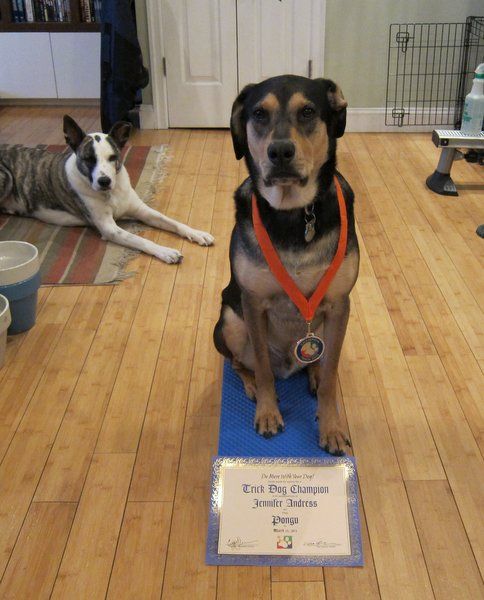
As I mentioned in my earlier post on the subject, Trick Dog is one of the easier sports to gain titles in. Unlike most dog sports, you don't have to compete in live events, worry about point scores, or gain "legs" under different judges. You can do all the work at home, the criteria are pretty relaxed (it's all pass/fail with effectively unlimited retries), the costs are relatively modest, and just about anybody can serve as a witness. It's a great way to get your feet wet if you like the idea of putting titles on your dog and are interested in dabbling in dog sports, but don't have the time, money, or gung-ho craziness to jump into the more formal venues.
In Pongu's case, we were coming at it from a slightly different angle -- Pongu's already had a fair amount of training in Rally and canine freestyle, along with other odds and ends as various things caught my interest along the way -- so it only took nine days to earn his championship once we decided to do Trick Dog at all. He already had most of the necessary behaviors from doing other sports.
There were still some new challenges for us, though. To qualify for TDCH (Trick Dog Champion), your dog has to demonstrate proficiency in 9 foundational areas of trick work: (1) hind-end coordination, (2) holding/carrying objects, (3) paw touch to directed target, (4) nose touch to directed target, (5) scentwork, (6) distance work, (7) silent signals (working on movement/hand gestures alone, without verbal cues); (8) behavior chains (one cue gets the dog to do multiple separate behaviors); and (9) "expert tricks" (sort of a catch-all provision for your dog to demonstrate tricks that are more difficult to train).
Pongu had no formal retrieve training, as we hadn't gotten to that level in Rally yet and he's not a natural retriever. He also had no scentwork training, since that comes pretty late in the game for competition obedience and we haven't even started that yet. So some of the exercise categories in Trick Dog -- the object hold/carry and scentwork -- were totally foreign, and those required us both to learn new things.
Even so, in nine days, we were good enough to pass muster (again, keeping in mind that the criteria is considerably more relaxed than it might be for some other sports!).
And that concludes Pongu's pursuit of Trick Dog titles, although certainly not his tricks training!
Crookytail, of course, has a lot longer to go. Pongu might have his TDCH, but the Crookydog only has a novice title. He's (barely) halfway to Intermediate now, but it will probably take him years to get all the way to the end, if he ever does.
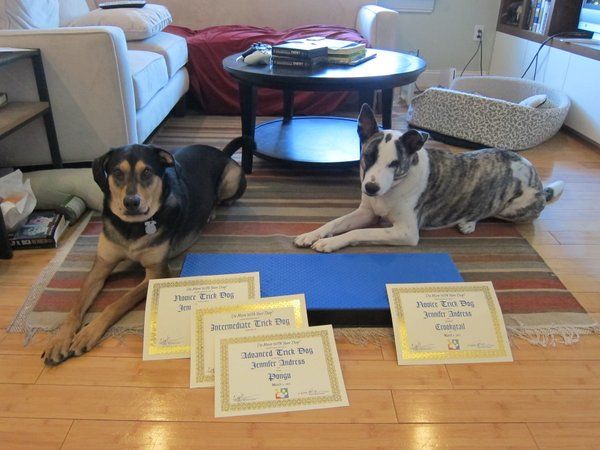
And he might not, since I'll be dragging Crookytail back into the Rally ring next month, and training Crooky in two disciplines at once is too much for my patience. I don't expect him to do particularly well, but I do want him to do something. His unreliability with strange dogs shows no signs of dissipating, but he did fine in the ringside waiting area at Pongu's last trial, so I guess it's back to the Rally circuit for the poor reluctant Crookydog.
At least until I figure out what else to do with him.
As I mentioned in my earlier post on the subject, Trick Dog is one of the easier sports to gain titles in. Unlike most dog sports, you don't have to compete in live events, worry about point scores, or gain "legs" under different judges. You can do all the work at home, the criteria are pretty relaxed (it's all pass/fail with effectively unlimited retries), the costs are relatively modest, and just about anybody can serve as a witness. It's a great way to get your feet wet if you like the idea of putting titles on your dog and are interested in dabbling in dog sports, but don't have the time, money, or gung-ho craziness to jump into the more formal venues.
In Pongu's case, we were coming at it from a slightly different angle -- Pongu's already had a fair amount of training in Rally and canine freestyle, along with other odds and ends as various things caught my interest along the way -- so it only took nine days to earn his championship once we decided to do Trick Dog at all. He already had most of the necessary behaviors from doing other sports.
There were still some new challenges for us, though. To qualify for TDCH (Trick Dog Champion), your dog has to demonstrate proficiency in 9 foundational areas of trick work: (1) hind-end coordination, (2) holding/carrying objects, (3) paw touch to directed target, (4) nose touch to directed target, (5) scentwork, (6) distance work, (7) silent signals (working on movement/hand gestures alone, without verbal cues); (8) behavior chains (one cue gets the dog to do multiple separate behaviors); and (9) "expert tricks" (sort of a catch-all provision for your dog to demonstrate tricks that are more difficult to train).
Pongu had no formal retrieve training, as we hadn't gotten to that level in Rally yet and he's not a natural retriever. He also had no scentwork training, since that comes pretty late in the game for competition obedience and we haven't even started that yet. So some of the exercise categories in Trick Dog -- the object hold/carry and scentwork -- were totally foreign, and those required us both to learn new things.
Even so, in nine days, we were good enough to pass muster (again, keeping in mind that the criteria is considerably more relaxed than it might be for some other sports!).
And that concludes Pongu's pursuit of Trick Dog titles, although certainly not his tricks training!
Crookytail, of course, has a lot longer to go. Pongu might have his TDCH, but the Crookydog only has a novice title. He's (barely) halfway to Intermediate now, but it will probably take him years to get all the way to the end, if he ever does.
And he might not, since I'll be dragging Crookytail back into the Rally ring next month, and training Crooky in two disciplines at once is too much for my patience. I don't expect him to do particularly well, but I do want him to do something. His unreliability with strange dogs shows no signs of dissipating, but he did fine in the ringside waiting area at Pongu's last trial, so I guess it's back to the Rally circuit for the poor reluctant Crookydog.
At least until I figure out what else to do with him.
Subscribe to:
Posts (Atom)